
Why climate resilience requires collective action, not just technical solutions
Climate resilience is often framed in terms of technologies, models, scenarios and investments. Yet one of its most fundamental drivers is more human: collaboration between actors. The work carried out in our Work Package — that considers risks and opportunities — clearly shows that building climate resilience in agriculture and forestry is not just a technical challenge, but a collective, human one.
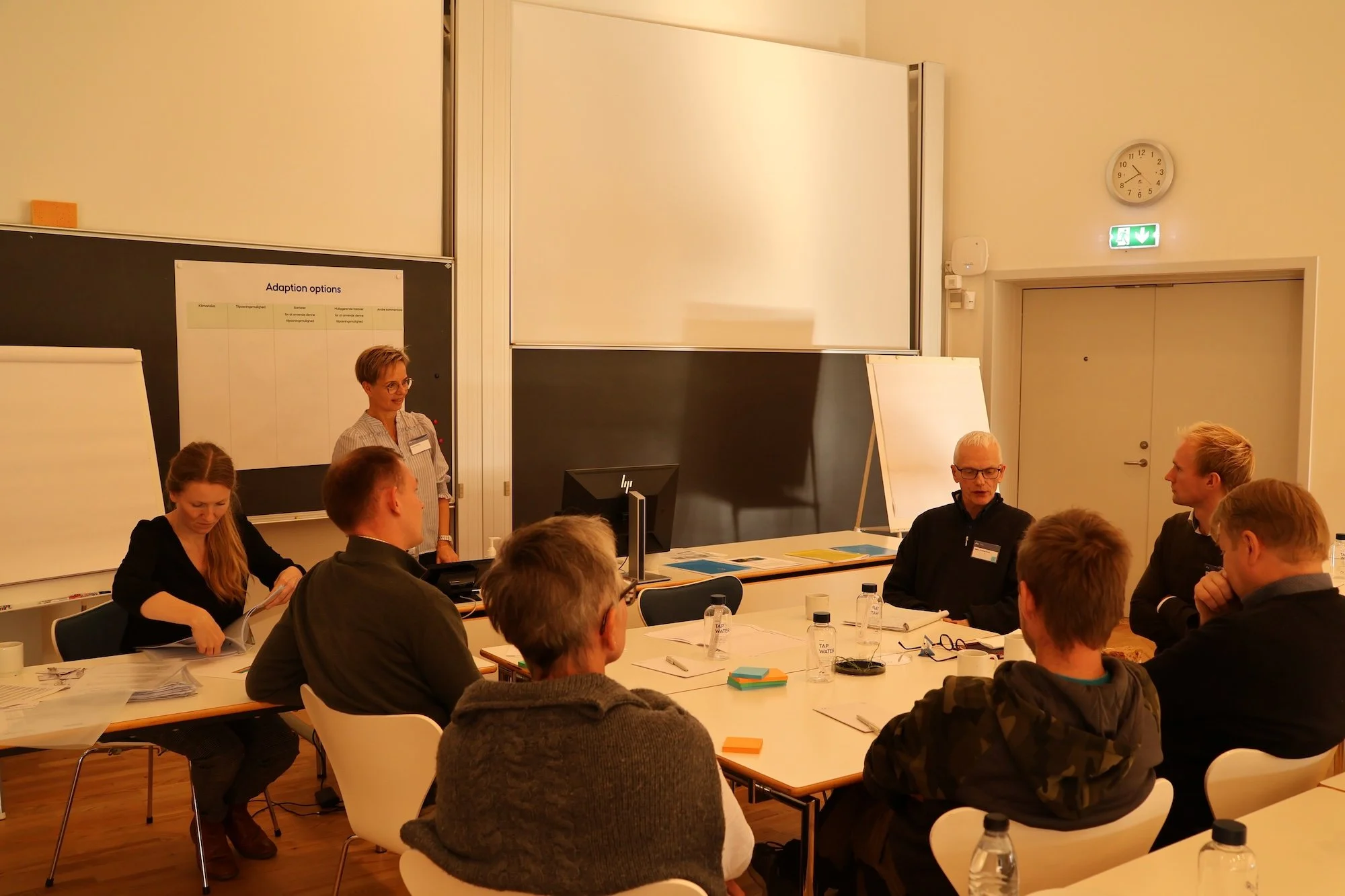
Precilience is bringing stakeholders from different sectors and regions to share insights on climate impacts and adaptation
Across 11 regions in Northern Europe, stakeholders, including farmers, forest owners, advisors, industry representatives and public authorities came together in autumn 2025 to share insights on climate impacts and adaptation. This work has revealed not only how climate change is already affecting production systems, but also how local knowledge, lived experiences, and collaboration shape and strengthen the capacity to respond.
One key insight is that climate risks are complex and interconnected. Stakeholders repeatedly highlighted challenges such as drought, floods, emerging pests, and economic pressures. These cannot be addressed as isolated issues. Instead, they require shared understanding and coordinated action across sectors and governance levels. Collaboration enables exactly this: it brings together diverse perspectives, helps make sense of uncertainty, and supports the identification of practical solutions.
Equally important is the role of stakeholder knowledge. Farmers and forest owners are often the first to observe changes, such as shifts in seasons, the emergence of new pests, or increasing vulnerabilities in soils and forests. The findings from our work so far show that these practical observations and lived experiences are invaluable for identifying risks and developing appropriate adaptation measures. By engaging stakeholders through interviews and co-creation processes, the project has been able to ground its analysis in real-world conditions rather than assumptions.
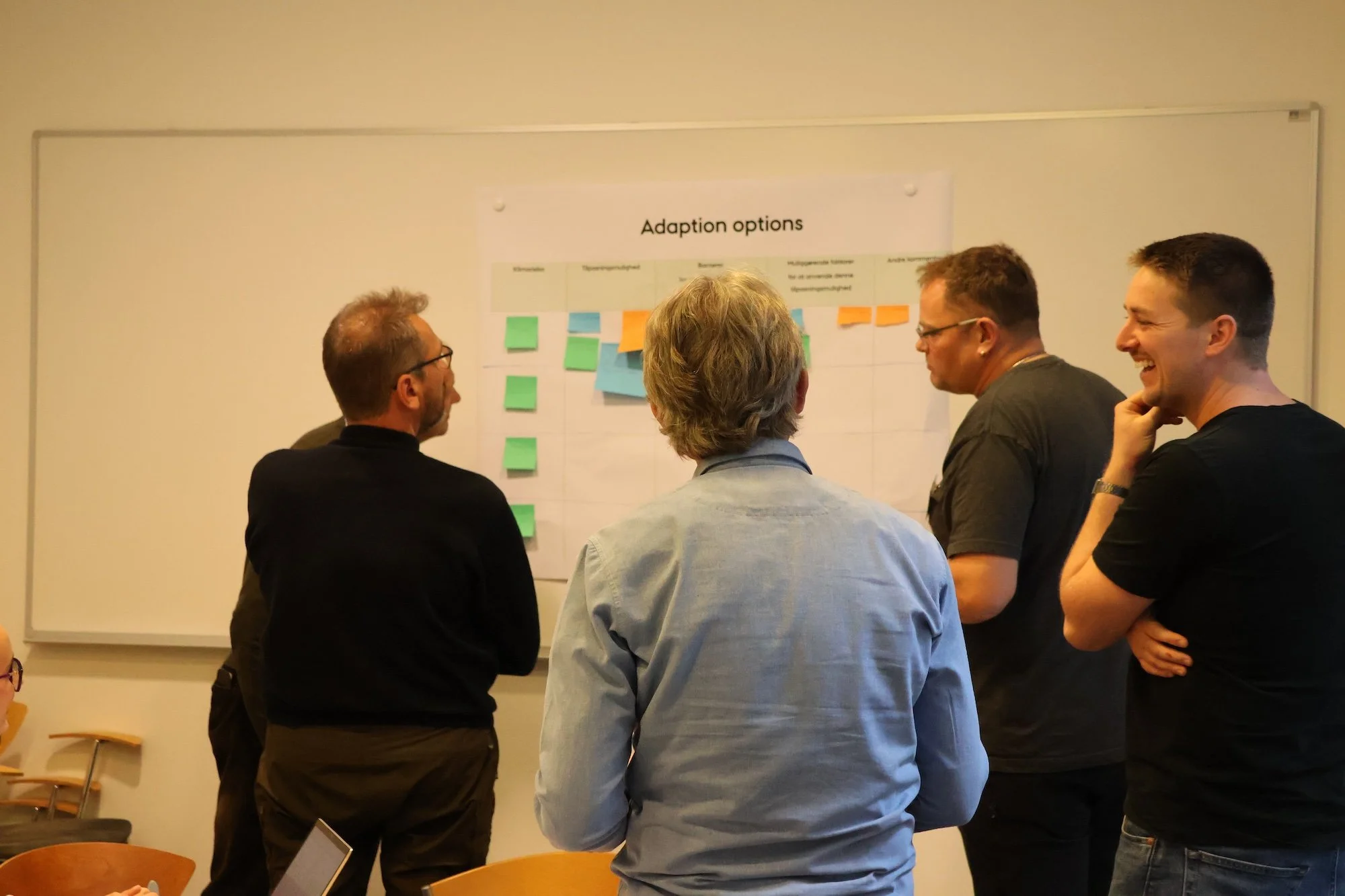
Stakeholders at a workshop in Denmark discuss different solutions for adapting to climate change
Collaboration also strengthens resilience by building networks of support. Stakeholders repeatedly emphasised the importance of peer-to-peer learning, advisory services and cooperation within value chains. Whether through farmer networks, producer organisations or joint initiatives, these connections enable knowledge exchange and learning. This helps to reduce risks and foster innovation. In many cases, collaboration was not only beneficial, but essential for adapting to increasingly unpredictable conditions.
At the same time, our findings are highlighting that collaboration does not happen automatically. Disconnected governance, limited advisory resources, and a lack of accessible information can hinder effective engagement. This underlines the need to actively invest in participatory processes, communication, and trust-building among stakeholders.
Resilience cannot be delivered from the outside. It must be co-created. By placing collaboration at its core, Precilience demonstrates that the pathway to climate resilience lies in combining scientific knowledge with local expertise, and in working together to navigate an uncertain future.
Sign up to our newsletter and follow our LinkedIn to stay informed on Precilience’s latest news and developments.