
Strengthening climate resilience in Danish agriculture through water solutions
Climate change is already having a tangible impact on Danish agriculture, with water management emerging as a critical challenge. Increasingly intense rainfall events, longer growing seasons, and higher evaporation rates are creating greater variability between periods of excess water and drought. This threatens yield stability and places growing pressure on existing water resources.
Precilience partner SEGES contributes practical, farmer‑driven knowledge to the project to address these challenges through nature‑based, climate adaptation solutions.
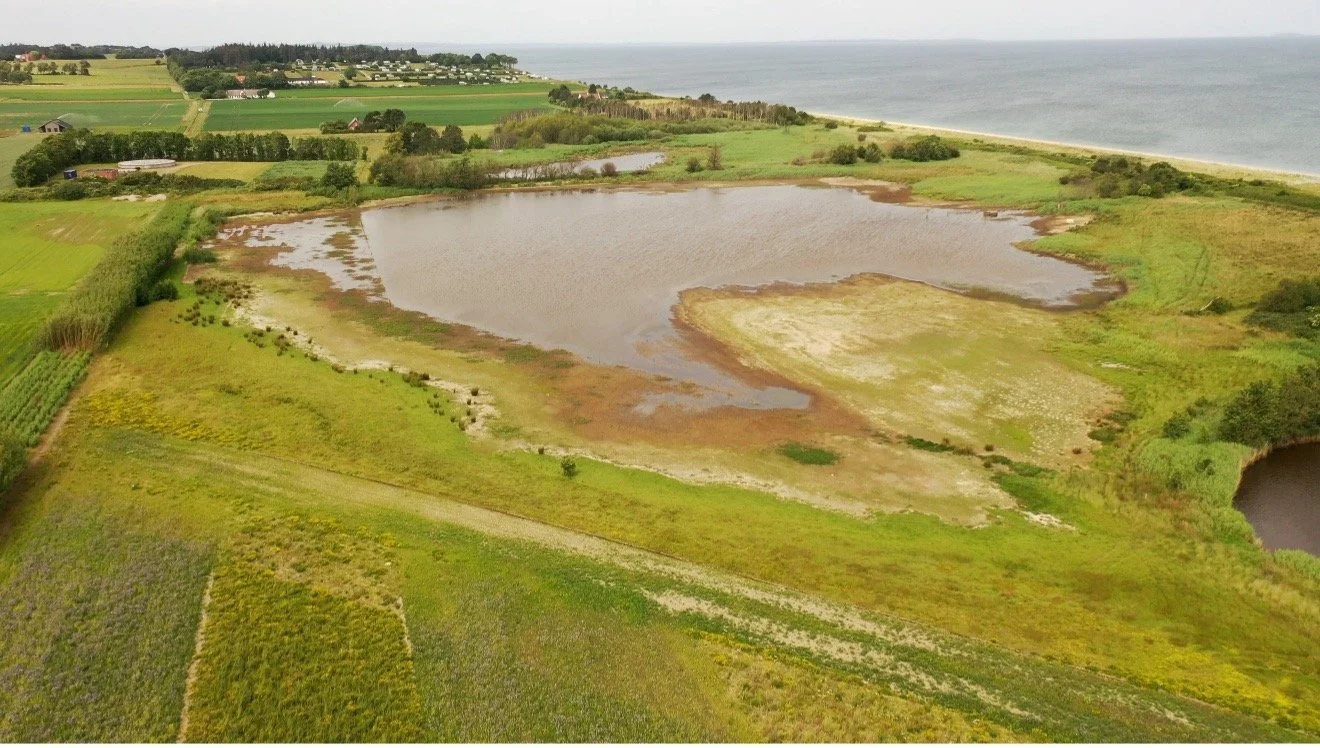
Flooded field in Denmark. Image courtesy of: SEGES Innovation
Water reservoirs as a multifunctional climate adaptation measure
Water reservoirs represent a promising and locally demanded solution. By collecting drainage water during wet periods, reservoirs provide a flexible and ready water source for irrigation during spring and early summer droughts. This is particularly relevant in areas with clay soils, which facilitate the use of non-permeable basin structures, and in regions where groundwater abstraction is restricted due to environmental constraints or competing water uses.
Beyond supporting agricultural production, drainage water reservoirs offer multiple co‑benefits: Recirculation of drainage water can reduce nutrient losses to the aquatic environment, contributing to improved water quality, while reservoirs designed with a natural aesthetic can support biodiversity and landscape integration.
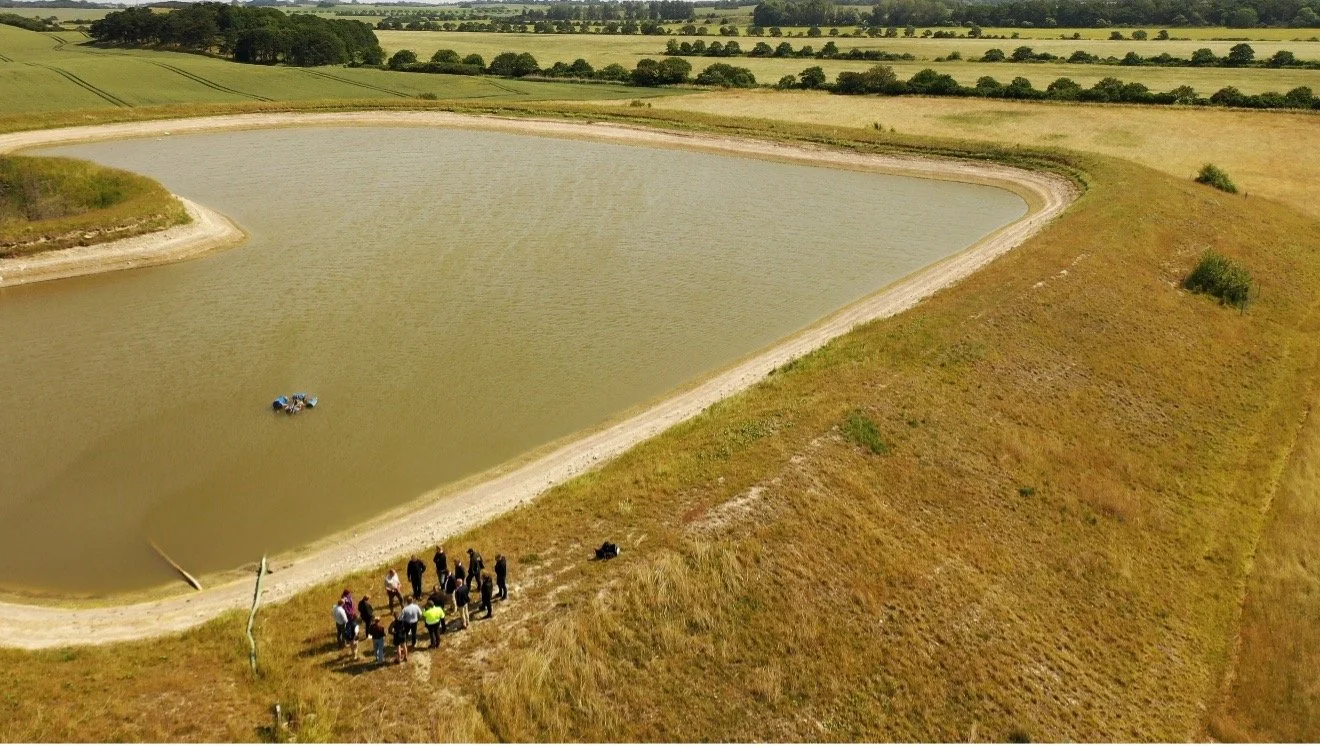
Water reservoir. Image courtesy of: SEGES Innovation
Bridging sectors to enable implementation
A core role of SEGES in Precilience is to bridge sectors and translate research into practice. We contribute as a Danish knowledge and innovation organisation that develops and applies data‑driven, practical solutions to support a sustainable and climate‑resilient agricultural sector.
Our work is grounded in real needs identified by farmers and focuses on addressing both opportunities and implementation barriers.
To support the uptake of water reservoirs, SEGES works in two complementary areas:
documenting the environmental and climate adaptation potential of reservoirs,
addressing the legal, administrative, and practical challenges faced by land managers.
Central to this approach is the facilitation of cross‑sector dialogue. By bringing farmers, authorities, researchers, and other key stakeholders together in physical meetings and workshops, we create space for trust‑based exchange, mutual understanding, and joint problem‑solving. These settings allow partners to gain a deeper understanding of each other’s perspectives and objectives, and to jointly discuss what is needed to move forward—while respecting each other’s professional viewpoints.
Supporting scalable and resilient solutions
By anchoring collaboration across the entire system, Precilience helps ensure that solutions are robust, context‑specific, and shaped by a broad range of expert perspectives. Collectively, this work contributes to paving the way for water reservoirs to become a viable and applicable tool for strengthening agricultural resilience and safeguarding food production under changing climatic conditions.
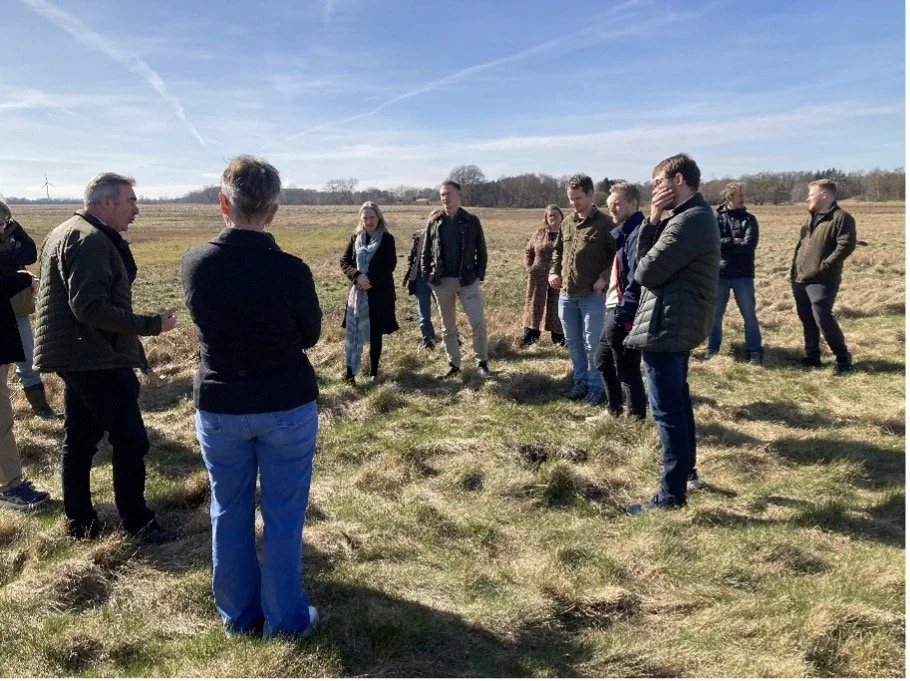
Stakeholders in a water reservoir workshop, Image courtesy of: SEGES Innovation
Read more resources on water reservoirs and field irrigation (in Danish).
Sign up to our newsletter and follow our LinkedIn to stay informed on Precilience’s latest news and developments.