
How is simulation modelling helping Nordic Forests adapt to climate change?
An interview with Prof. Dominik Thom from Dresden University of Technology
What is simulation modelling?
Simulation modelling is a sophisticated tool that helps scientists and researchers explore ‘what if?’ scenarios. Instead of relying on guesswork, models create virtual versions of real ecosystems that allow researchers to adjust variables (such as rainfall, temperature and pest outbreaks) and test different solutions (such as the introduction of new tree species) without posing a risk to real environments. By simulating outcomes in complex environments like forests, these models can help policymakers and land managers better predict potential futures and make more informed decisions about climate adaptation and mitigation strategies.
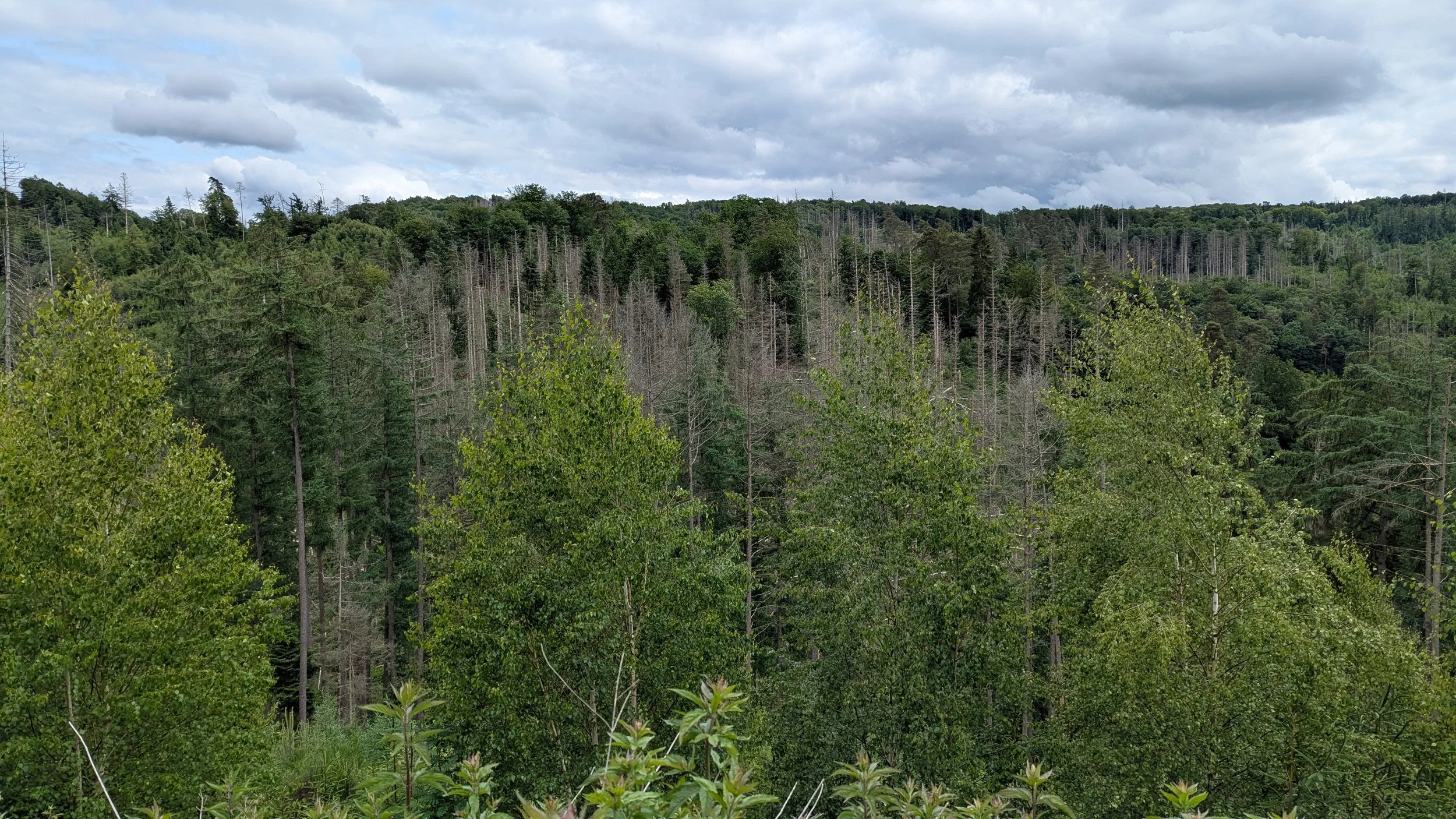
A diversity of tree species spanning northern forests, where signs of disturbance reflect a changing climate. Image courtesy of: Dominik Thom.
Why modelling matters
Europe’s forests are increasingly under pressure from multiple risks and threats. Rising temperatures, shifting rainfall patterns, higher windspeeds and wildfire intensification as well as pests and diseases are transforming landscapes at an alarming rate. At the same time, demands remain on forests to produce timber, store carbon, protect biodiversity, and provide recreational space. Each of these pressures, among others, are variables that can change in the future to different, unknown degrees. This is where modelling comes in, as Dominik explains: “Models allow us to test scenarios before they happen. They give us a way to prepare for uncertainty rather than react to it.”
From data to decisions: how simulation modelling is benefiting Precilience
In the Precilience project, simulation modelling is critical to understanding how Europe’s forests might be able to adapt to a rapidly changing climate. Researchers like Prof. Dominik Thom from Dresden University of Technology are demonstrating the potential of advanced simulation tools to further efforts to safeguard these precious ecosystems.
Modelling climate change impacts on forest ecosystems in Precilience starts with collecting and inputting data into iLand. It is an individual-based forest landscape and disturbance model developed over more than a decade by Prof. Dr. Rupert Seidl and Dr. Werner Rammer in Austria with involvement from Dominik as the beta tester who also parameterized the central European tree species. Datasets are diverse and include information such as climate change scenarios, soil properties, forest inventories, and information about forest management. Unlike more traditional models that simulate forests as uniform stands (units), iLand can simulate the behaviour of millions of trees individually, each competing for light, water, and nutrients across a dynamic landscape.
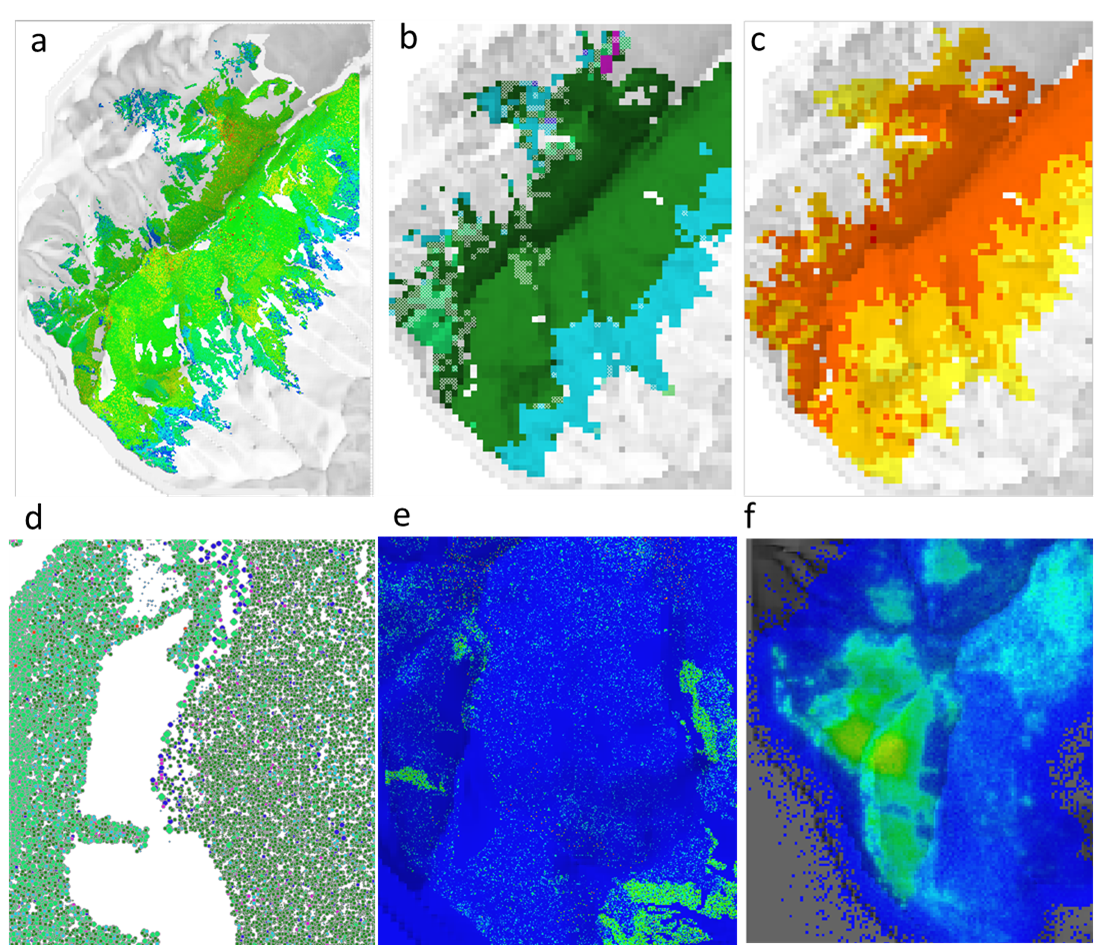
Example visualisations taken from the “demo” landscape. Image source: iland-model.org
This level of detail matters: “Forest resilience depends on interactions at multiple scales,” explains Dominik. “By modelling individual trees, we can capture how disturbances, like storms or pests, ripple through the landscape over decades.”
iLand is process-based, meaning it doesn’t just correlate observed forest dynamics with environmental variables; it simulates underlying ecological processes like photosynthesis, carbon allocation, and seed dispersal. This makes predictions robust under novel conditions, which is essential when climate change pushes ecosystems beyond historical experience.
Forestry in focus
Within Precilience, modelling is applied to real-world forestry challenges. Researchers are using iLand to explore questions such as how spruce forests might respond to hotter, drier summers; what happens to biodiversity and ecosystem services when management shifts towards mixed-species stands; and how windstorms and bark beetle outbreaks may interact under future climate conditions.
These kinds of “virtual experiments” would be impossible to conduct in reality. With simulation modelling, researchers can compress centuries of forest development into hours, testing different management strategies and visualising their long-term consequences. The resulting insights may help to guide decisions that sustain timber production, carbon storage and biodiversity conservation in the future.
A proactive approach for the future
Resilience is ultimately about readiness. “Without modelling, we would be navigating blind. It’s the foundation for planning adaptation measures that actually work,” says Dominik.
By anticipating risks before they unfold, models help avoid costly mistakes and protect the ecosystem services that society depends on. They also promote transparency and collaboration: Precilience makes its data and results openly available through platforms such as Zenodo, enabling researchers and practitioners across Europe to learn from and build upon the project’s findings.
The work does not stop here! Future developments will make models even more powerful by improving the integration of belowground processes, biotic interactions, and big data from remote sensing. But the principle remains unchanged: better models lead to better-informed decisions.
As Dominik puts it: “Forests consist of long-lived trees. The choices we make today will shape landscapes for centuries. Modelling helps us make those choices more effectively.”
Sign up to our newsletter and follow our LinkedIn to stay informed on Precilience’s latest news and developments.