
A Startling Discovery: Precilience Scientist Identifies Brown Spot Needle Blight in South West Finland
In early October 2025, a Precilience workshop was held in Salo, South-West Finland bringing experts in forestry and agriculture together to discuss the changing climate and potential solutions. As we wrapped up after a productive session, my attention was suddenly drawn to some yellowing needles on an ornamental Pinus mugo (non-native mountain pine) behind the building.
As a forest pathologist, I’ve learned to trust such moments of uneasy curiosity and, much to the amusement of my colleagues, dived into the shrubbery and emerged holding a clutch of diseased-looking needles.
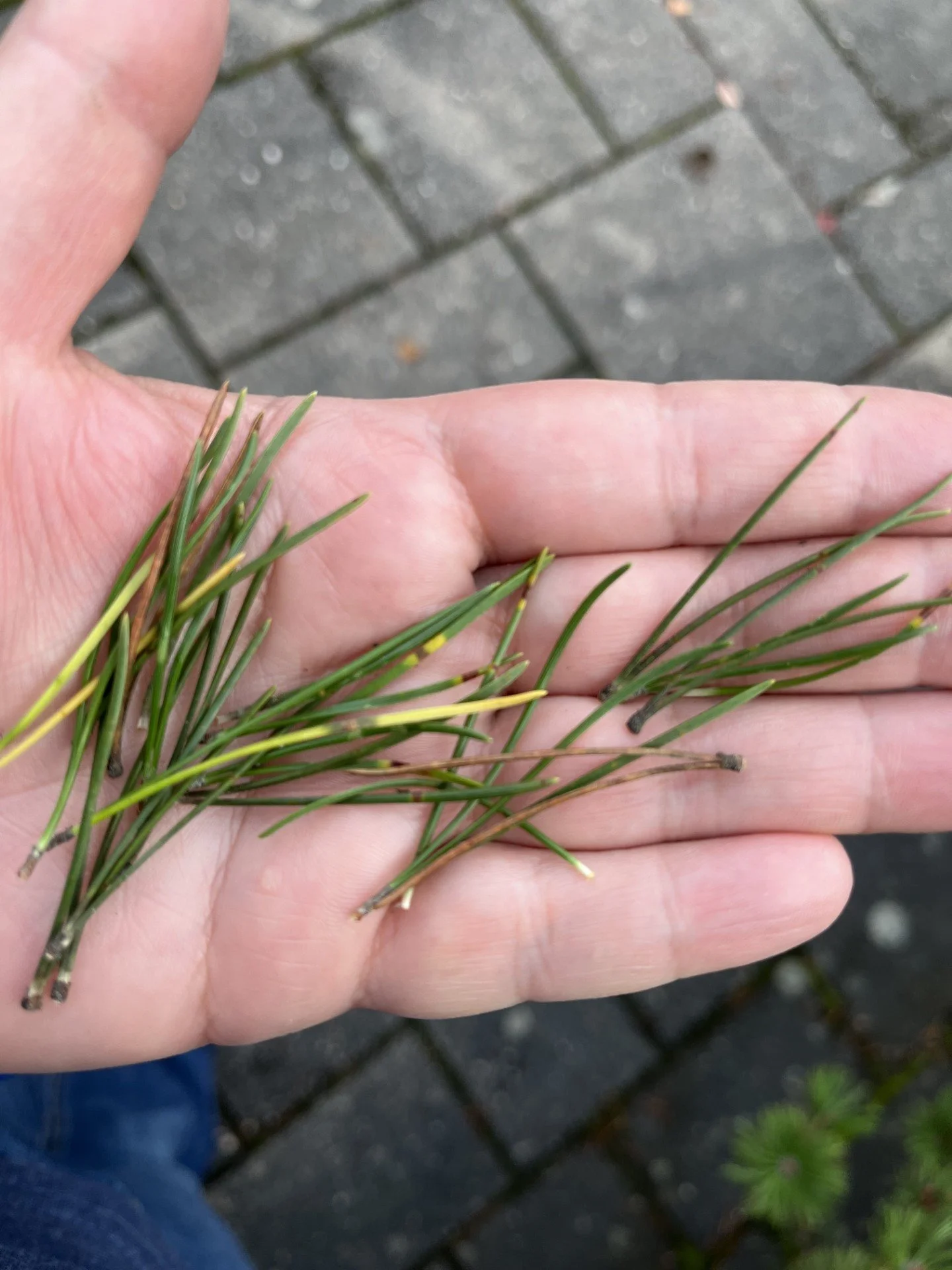
Diseased-looking needles, Eeva Terhonen
Back in the lab, curiosity turned to concern as, over the following weeks, my colleagues and I isolated the disease from the plant’s yellowing needles. Subsequent sequencing results were unambiguous: the offender was Lecanosticta acicola, the fungal pathogen responsible for brown spot needle blight (BSNB), and the first confirmed sighting in Finland.
What is brown spot needle blight?
Lecanosticta acicola is an invasive fungal pathogen originating from North America and most likely introduced to Europe through the movement of infected plant material. Its spread across Europe in recent decades has raised increasing concern among forest pathologists and plant health authorities.
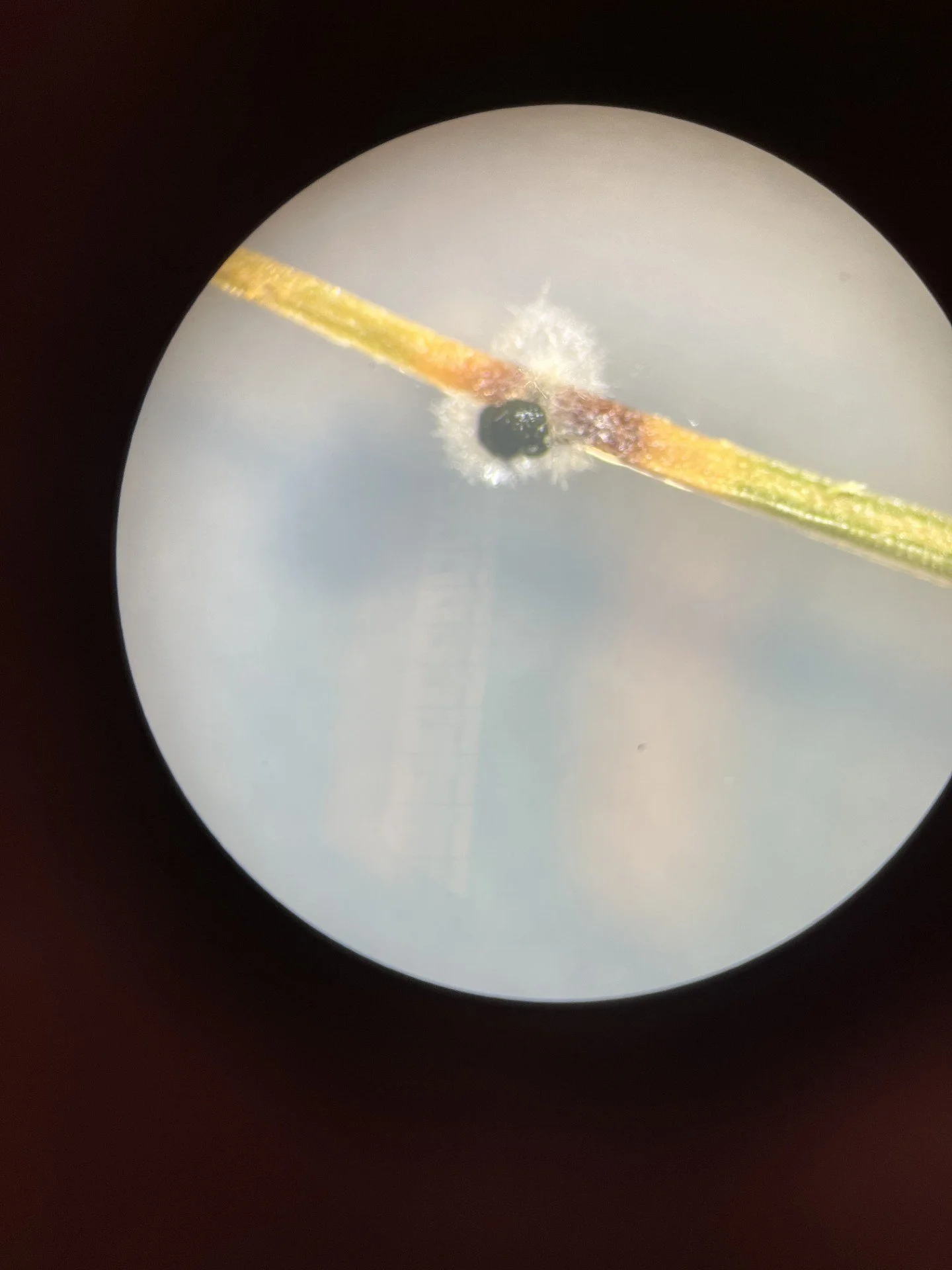
Infected trees suffer from needle cast, which reduces photosynthetic capacity and weakens the host plant. In drought-prone areas especially, repeated needle loss can have severe consequences, potentially leading to tree mortality or predisposing trees to secondary pests and diseases. Under changing climate conditions, where drought stress is expected to increase, the impacts of such pathogens may be further amplified.
What this means for Finnish forestry
Most critically, L. acicola is capable of infecting Scots pine (Pinus sylvestris), the main pine species in Finland and a cornerstone of boreal forest ecosystems. The pathogen is classified as a quality plant pest in Finland, meaning it must not be present in any plants bought and sold in Finland. This makes its detection particularly significant for forest nurseries and seedling production, where plant health is essential both economically and ecologically.
Early detection therefore plays a crucial role in limiting spread and mitigating long-term risks, both for forests and for the systems that depend on healthy planting material.
For me, this episode perfectly captures what the Precilience project is all about. A workshop designed to discuss future climate risks and resilience led, quite unexpectedly, to a concrete, real-world discovery that enabled us to raise the alarm. Results were shared rapidly with stakeholders and the public via Yle and largest tabloids Iltalehti and Ilta-Sanomat to facilitate immediate risk mitigation on the ground. As a further precautionary measure, the ornamental pines at the venue were removed and burned to prevent the risk of further spread.
Further reading
Further details about the finding have been submitted for publication in the Journal of Plant Diseases and Protection. The sequencing data are publicly available on the Zenodo platform.
To learn more and follow the project, sign up to our newsletter and follow us on LinkedIn.