
Growing Resilience: How Agricultural Simulation Modelling Helps Farmers Prepare for an Uncertain Climate
An interview with Professor Davide Cammarano from Department of Agroecology at Aarhus University
Predicting how crops will grow in the future has never been more challenging. With shifting rainfall patterns, rising temperatures and increasingly unpredictable seasons, farmers across Europe are facing conditions that no longer resemble the climate they once learned to navigate. In the EU-funded project Precilience, researchers are turning to agricultural simulation modelling to better understand how farming systems can adapt, not just today, but decades into the future.
What is agricultural simulation modelling?
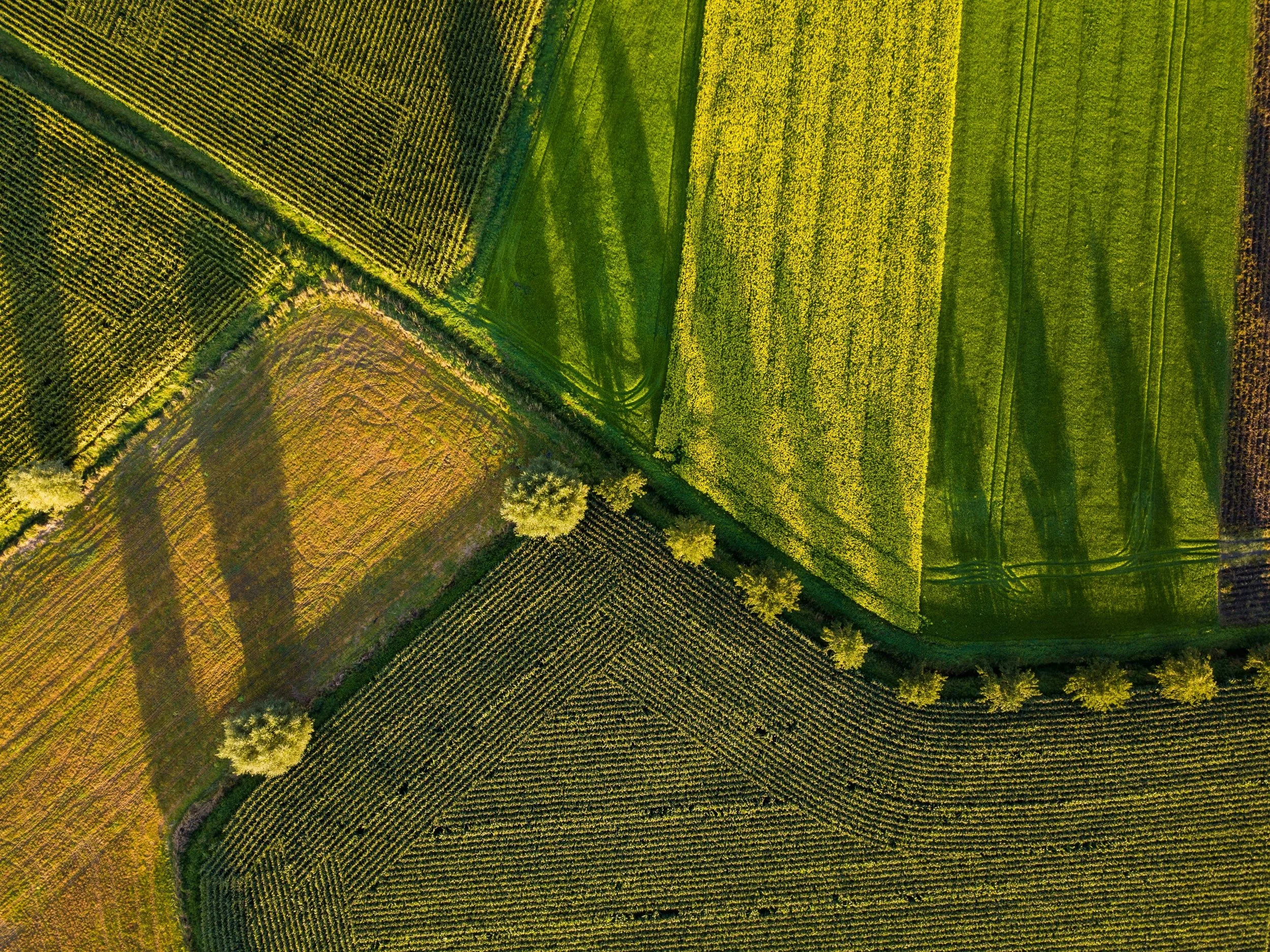
Agricultural simulation modelling is a method used to replicate the daily interactions between soil, crops, weather, and farming practices. Rather than running costly or time-consuming field experiments, researchers can complement results from those experiments to create virtual agricultural systems where they can test “what if?” scenarios under controlled but realistic conditions.
As Professor Davide Cammarano from Department of Agroecology at Aarhus University and research lead in Work Package 2 of Precilience, explains:
“Agricultural modelling uses system-based models that simulate daily interactions between soil, plant, weather, and management. It allows us to explore the future in a way we cannot do in the field today.”
“These models are not tied to a single tool. Instead, researchers select several different crop models to compare their outputs. It is a way to capture uncertainty and avoid over-reliance on one system,“ Davide Cammarano explains. “This ensemble approach strengthens the robustness of predictions.“
Why modelling matters for Precilience
One of the biggest challenges in climate adaptation is that future conditions cannot be physically tested today. Most crops are grown only once a year, and real-world experiments cannot be run decades in advance or they are too costly to setup for this matter. Simulation modelling solves this by incorporating climate projections extending all the way to the end of the century.
Davide Cammarano puts it simply:
“When we want to look at the value of adaptation in the future, we cannot test it now with current weather conditions. Only in silico can we test many different adaptation practices under future climate scenarios.”
Models simulate changes in 30-year “climate periods,” capturing variability rather than predicting yield year by year. This gives a probabilistic understanding of what farmers might expect by the 2050s or 2100s.
Through modelling, researchers can test:
· How different crop management strategies perform under projected climates
· How improved varieties (genotypes) respond to heat or drought
· Whether new practices, like water-saving approaches, offer long-term benefits
· Which combinations of adaptation strategies provide the highest resilience
This ability to look forward is essential for building climate-smart agriculture.
Testing real-world adaptations both virtually and in the field
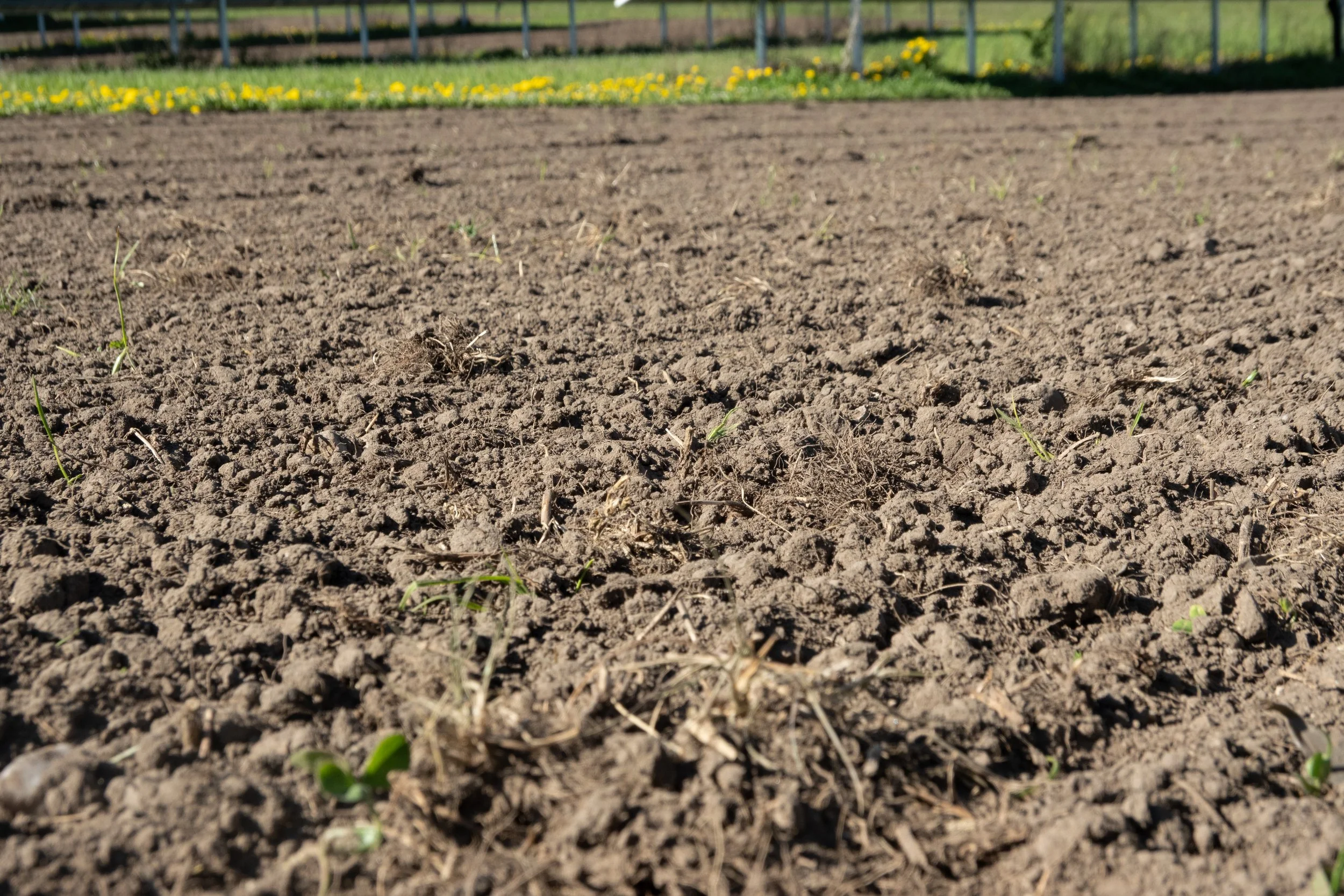
While the approach described above is something that the scientific community has done in decades what sets Precilience apart is that it combines simulation, field experiments, and local stakeholders’ input. In fact, Work Package 2 collaborates closely with stakeholders such as farmers, advisors, and local authorities from each participating region to identify the adaptation strategies most relevant to them.
Davide Cammarano highlights what makes the project unique:
“The uniqueness is that we are testing adaptations that come directly from stakeholders. These are practices that farmers already find useful or necessary, and we test them both in field conditions and in simulation.”
For example, in Denmark researchers are analysing water-saving strategies selected during stakeholder workshops. Field trials show their effect under today’s climate, while simulations project their value far into the future.
This combined approach allows researchers to address a key question - If an adaptation increases yield today, will it still work under a warmer, drier, or more variable climate?
As Davide Cammarano describes:
“Something that works now may not work in 50 years. We want stakeholders to see: yes, today adaptation gives you a positive effect, but under climate change this same practice may lead to a decline. So, what can you do then?”
These insights help farmers and policymakers prepare rather than react.
Climate scenarios: Embracing uncertainty
In terms of climate projections Precilience uses several Shared Socioeconomic Pathways (SSPs) from the IPCC, and within each pathway, five different global climate models. This gives a realistic range of temperature and rainfall futures.
Davide Cammarano explains:
“The IPCC does not give a single trajectory; they give a shaded area because they use around 40 global climate models. We pick four or five models per scenario to reflect that uncertainty.”
By combining:
· 2–3 crop models
· 5 global climate models per SSP
· multiple emission scenarios
…researchers can quantify not only the expected change but also the uncertainty around it. This helps build resilient strategies that perform across a wide range of possible futures.
From data to decisions
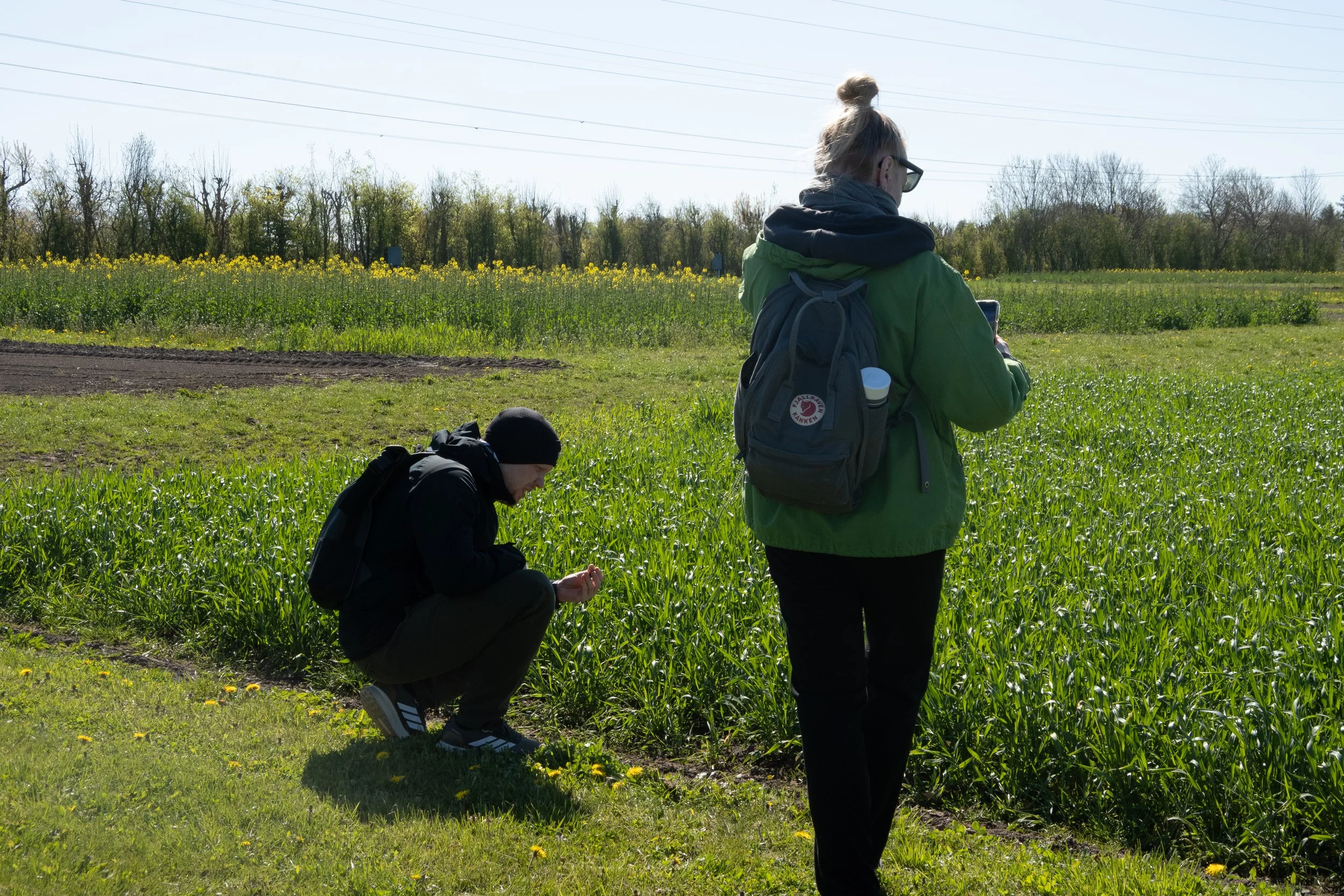
To ensure realistic predictions, the team calibrates crop models using field trial data. Soil characteristics, weather records, and management details feed into the simulations. Crop varieties are calibrated primarily for phenology, the developmental timing of the crop, which tends to be stable across cultivars in a region.
Davide Cammarano explains why the model outputs are shown in relative rather than absolute yield:
“We focus on percentage changes rather than absolute yields. Phenology is conservative, so using relative changes is more robust when scaling from field trials to regional simulations.”
This makes the results easier for farmers and policymakers to interpret and apply.
A more grounded, practical way of modelling
One of the strengths of Precilience is its strong link to real farming communities. Each region is establishing a stakeholder advisory board, involving actors such as farmers, advisors, insurers, and local authorities. These groups will help interpret the results and integrate them into regional adaptation strategies.
Davide Cammarano sees this as crucial:
“We want to show the results to regional stakeholders and discuss them. They need to see the implications for their decisions now and in the future.”
The project aims not only to understand climate impacts, but to support decision-making at local and regional levels.
The impact of Precilience
Ultimately, the goal is to help Europe’s farming communities prepare for the climate conditions they will face in the coming decades.
Davide Cammarano summarises it clearly:
“We want local farmers and stakeholders to be more aware of the impact of climate change in their region and to understand the real value of adaptation under future conditions.”
By combining advanced models, on-the-ground experiments, and stakeholder-driven insights, Precilience is creating a roadmap for resilient agriculture across Europe.
Read more in a resource on the interdisciplinary modelling platform in forestry and agriculture led by Davide Cammarano.
Sign up to our newsletter and follow our LinkedIn to stay informed on Precilience’s latest news and developments.